Home » Bio

Category: Bio

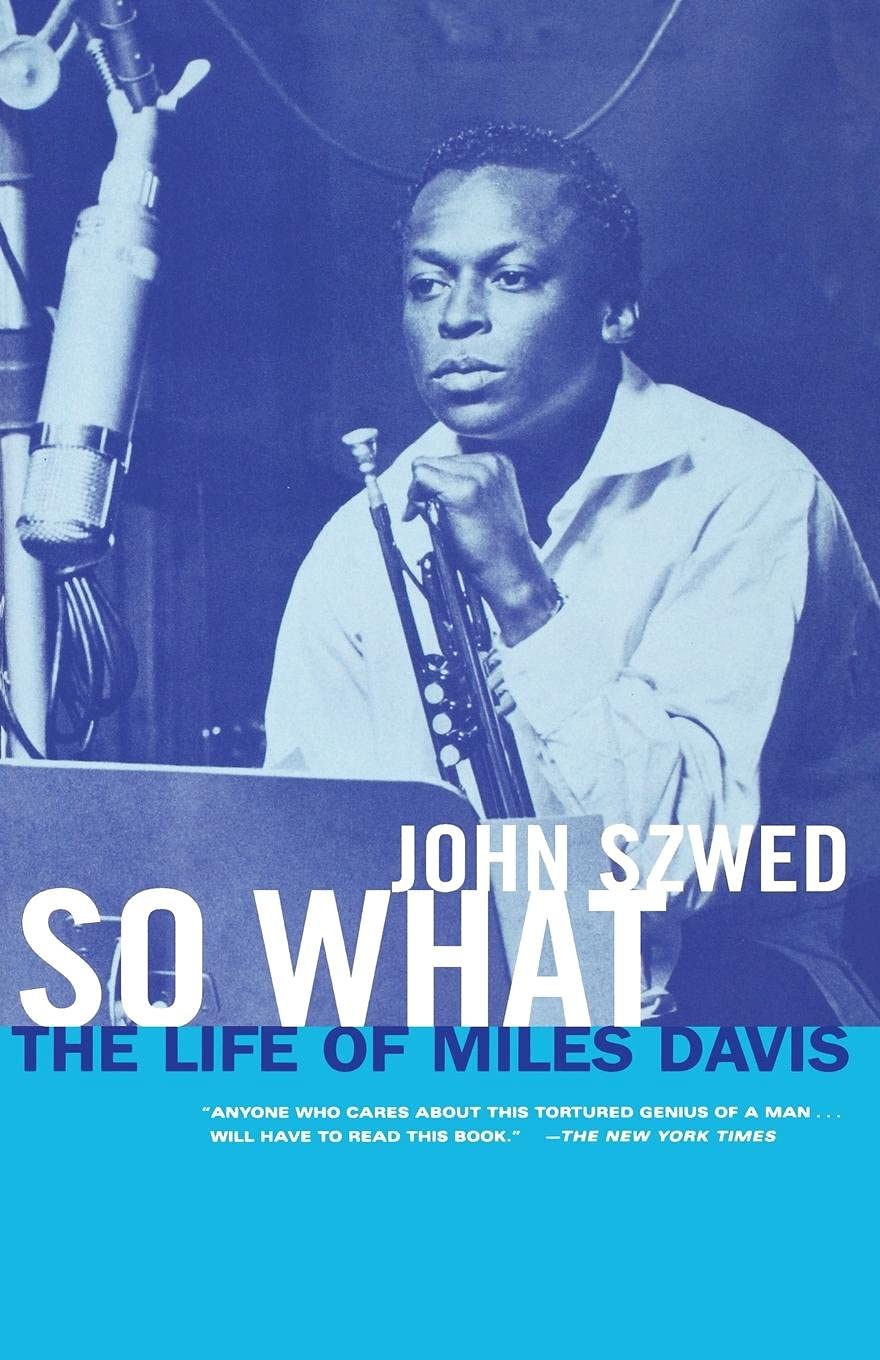
SO WHAT: THE LIFE OF MILES DAVIS

So What: The Life of MIles Davis

So What: The Life of Miles Davis

Musical genius, visionary artist, enigma — more than ten years after his death, Miles Davis still looms large as a cultural icon. In this, the first new biography since Davis’ death, John Szwed draws on various archives and never-before-published interviews with those who knew him to produce the richest and most revealing portrait of Miles Davis to date.

The shy son of a dentist from Illinois, Miles Dewey Davis III would go through several transformations before becoming the image of cool. Change, says Szwed, was the driving force in both Davis’ life and music — as quickly as he established a new direction in his music and a new identity, he would radically reinvent both. He seemed to thrive on close musical relationships — playing with jazz greats from Charlie Parker to John Coltrane and working with Dizzy Gillespie, Sonny Rollins, Wayne Shorter, and composer Gil Evans, among others — and yet the enduring image of Davis is of a lone figure, famously turning his back on the audience. He was at the peak of his career, having achieved star status, when he withdrew from the spotlight, spending years as a recluse. These seeming contradictions fueled the myths surrounding the man, but Szwed’s insights into Davis’ personality and artistic creativity shed new light on his life, from his turbulent relationships to his drug use and mysterious last days.

Elegantly written and carefully researched, So What is the authoritative life of an artist who was always ahead of his time.
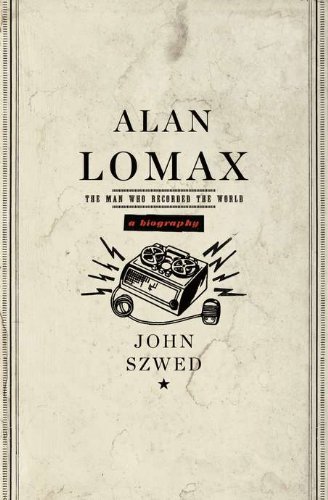

Alan Lomax: The Man Who Recorded the World

ALAN LOMAX: The Man Who Recorded the World

Folklorist, archivist, anthropologist, singer, political activist, talent scout, ethnomusicologist, filmmaker, concert and record producer, Alan Lomax is best remembered as the man who introduced folk music to the masses. Lomax began his career making field recordings of rural music for the Library of Congress and by the late 1930s brought his discoveries to radio, including Woody Guthrie, Pete Seeger, and Burl Ives. By the 1940s he was producing concerts that brought white and black performers together, and in the 1950s he set out to record the whole world.

Lomax was also a controversial figure. When he worked for the U. S. government he was tracked by the FBI, and when he worked in Britain, MI5 continued the surveillance. In his last years he turned to digital media and developed technology that anticipated today’s breakthroughs. Featuring a cast of characters including Eleanor Roosevelt, Leadbelly, Carl Sandburg, Carl Sagan, Jelly Roll Morton, Muddy Waters, and Bob Dylan, Szwed’s fascinating biography memorably captures Lomax and provides a definitive account of an era as seen through the life of one extraordinary man. [AMAZON]

SPACE IS THE PLACE: THE LIVES AND TIMES OF SUN RA

SPACE IS THE PLACE: THE LIVES AND TIMES OF SUN RA

Space Is the Place: The Lives and Times of Sun Ra

Always riveting, Space Is the Place is the definitive biography of “one of the great big-band leaders, pianists, and surrealists of jazz” (New York Times)–unparalleled for his purposeful outlandishness, a man who exerted a powerful influence over a vast array of artists.

Sun Ra — a/k/a Herman Poole “Sonny” Blount — was born in Alabama on May 22, 1914. But like Father Divine and Elijah Muhammad, he made a lifelong effort to obscure many of the facts of his early life. After years as a rehearsal pianist for nightclub revues and in blues and swing bands, including Wynonie Harris’s and Fletcher Henderson’s, Sun Ra set out in the 1950s to find a way to impart his views about the galaxy, black people, and spiritual matters through the various incarnations of the Intergalactic Arkestra. His repertoire ranging from boogie-woogie, swing, and bebop to free form, fusion, and whatever, Sun Ra was above all a paragon of contradictions: profundity and vaudeville; technical pianistic virtuosity and irony; assiduous attention to arrangements and encouragement of collective improvisation; respect for tradition and celebration of the fresh.

Some might have been bemused by his Afro-Platonic neo-hermeticism; others might have laughed at his egregious excesses. But Sun Ra was at once one of the great avant-gardists of the latter half of the twentieth century and a black cultural nationalist who extended Afrocentrism from ancient Egypt to the heavens.

Charting the whole of Sun Ra’s life and career, Szwed outlines how after years in Chicago as a blues and swing band pianist, Sun Ra set out in the 1950s to impart his views about the galaxy, black people, and spiritual matters by performing music with the Arkestra that was as vital and innovative as it was mercurial and confounding. Szwed’s readers — whether they are just discovering Sun Ra or are among the legion of poets, artists, intellectuals, and musicians who consider him a spiritual godfather — will find that, indeed, space is the place. [Amazon]

About John Szwed

About John Szwed

John Szwed is an Adjunct Senior Research Scholar at Columbia University where he was Professor of Music and Jazz Studies, Editor-in-Chief of the website JazzStudiesOnline.org, and Director of the Center for Jazz Studies from 2008-2014.

He has received fellowships from the John M. Guggenheim Foundation and the Rockefeller Foundation, and was awarded a Grammy in 2005 for Doctor Jazz, a book included with Jelly Roll Morton: The Complete Library of Congress Recordings by Alan Lomax on Rounder Records. The Jazz Journalists Association gave him a Lifetime Achievement award in 2019. He has authored or edited 19 books, and as a journalist has written for The New York Times, The Washington Post, Wire, and many other publications in the US and Europe. From 1979 to 1999 he wrote for the Village Voice.

Szwed has produced several recordings and has appeared in a number of documentaries and television specials. From 1980 to 1982 he was the music commentator on Terry Gross’ Fresh Air on NPR, and from 1993 to 2003 he was president of Brilliant Corners, a non-profit music production company located in New York City. He was General Editor of the Jazz Perspectives Book Series for The University of Michigan Press.

He was born in Eutaw, Alabama, and raised in Birmingham and in Burlington, New Jersey. In high school Szwed studied trombone with Donald S. Rinehardt and music theory with Mervin Hutton, and played bass and trombone professionally for ten years. He studied at Marietta College and Ohio State University, where he received a Ph.D in anthropology.

His research in social anthropology and folk music took him to Newfoundland, the Georgia Sea Islands, and Trinidad. He has taught at Temple University, Lehigh University, New York University, the University of Pennsylvania (where he was co-director of the Center for Urban Ethnography with Erving Goffman and Dell Hymes, and was Chair of the Department of Folklore and Folklife). At Yale University he was John M. Musser Professor of Anthropology, African American Studies, and Film Studies for 26 years. He was also Louis Armstrong Professor of Jazz Studies at Columbia University in 2003-04 and 2005-2007, and Professor of Music and Jazz Studies and Director of the Center for Jazz Studies from 2008-2014.